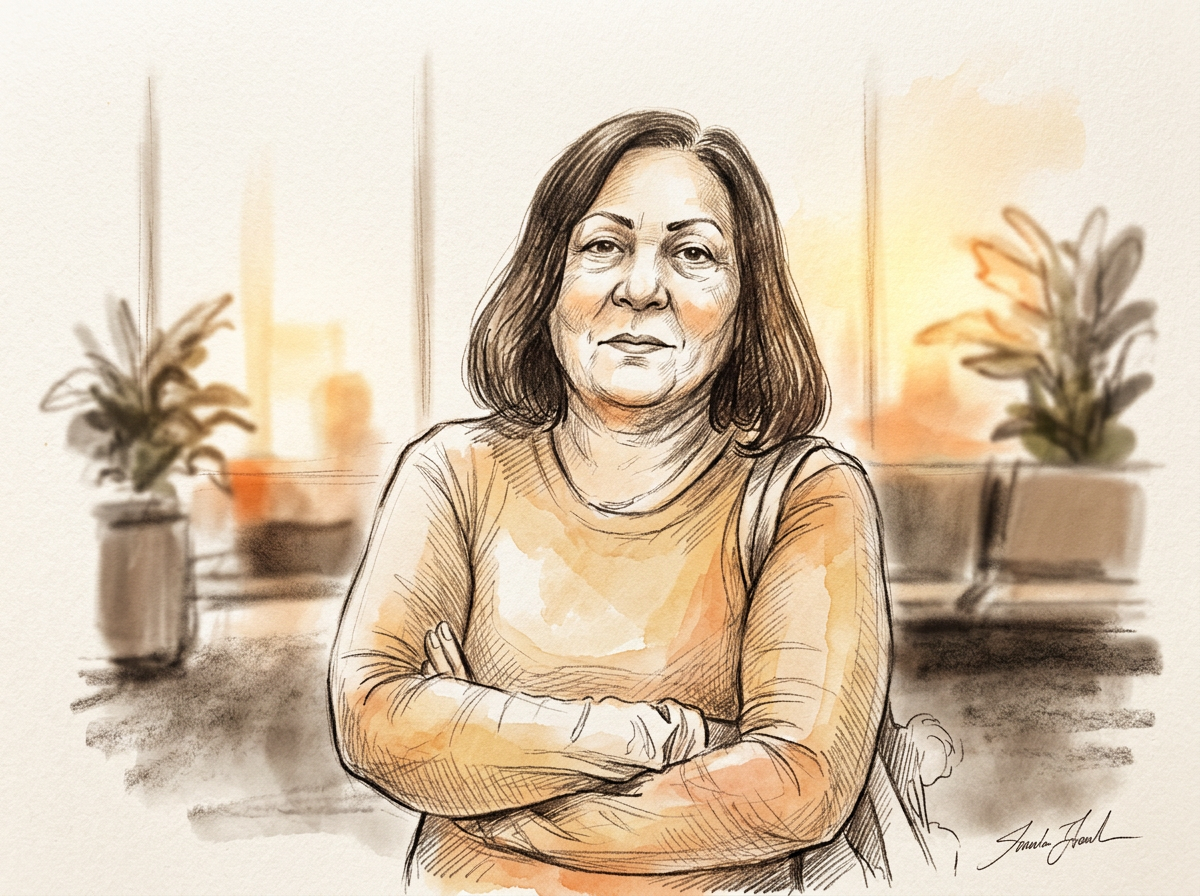

In today's fast-paced, transactional world, we often get caught up in material exchanges and forget the immense, quiet wealth hidden in our heritage. By exploring Dua and Ashirwad, I wanted to remind myself and others of the simple, pure energy of selfless goodwill - a timeless tradition passed down by our ancestors that has the power to heal, ground, and connect us across all boundaries.
People everywhere want to feel safe, healthy, happy, loved, successful, and protected. To express these deep wishes, we use the powerful language of blessings. Two of the most beautiful words for this across cultures are Dua and Ashirwad. While Dua connects us directly to the Almighty and Ashirwad connects us deeply to our roots, both represent the ultimate act of channeling pure, positive energy toward another soul.
A Dua is a humble prayer, whispered to the Almighty. It is a heartfelt plea for safety, peace, success, growth, protection, and healing for oneself or someone else. The beauty of Dua lies in its absolute inclusivity; anyone can pray for anyone. A child can pray for their parents, a friend for a friend, or a person for a complete stranger.
We usually ask well-wishers for duas before taking major life decisions. This same empathy connects us during major hardships. We recently witnessed this incredible empathy during immense tragedies, like the devastating floods in Nepal. Even with no personal ties to the victims, every compassionate heart around the world is moved to pray for their rescue, comfort, and national recovery. Indeed, this is a time where everyone who has a heart is praying for the country's recovery!
We often experience this profound connection in daily life. You might meet a stranger at an airport, a bustling market, or a wedding. After sharing a brief but meaningful conversation, they might warmly say, "Aap se mil ke accha laga, duas mein yaad rakhna" (Glad to meet you, remember me in your prayers). In that brief moment, a pure, selfless spiritual bond is formed. In a world driven by transactions, a stranger asking for your prayers is the ultimate reminder that humanity still exists.
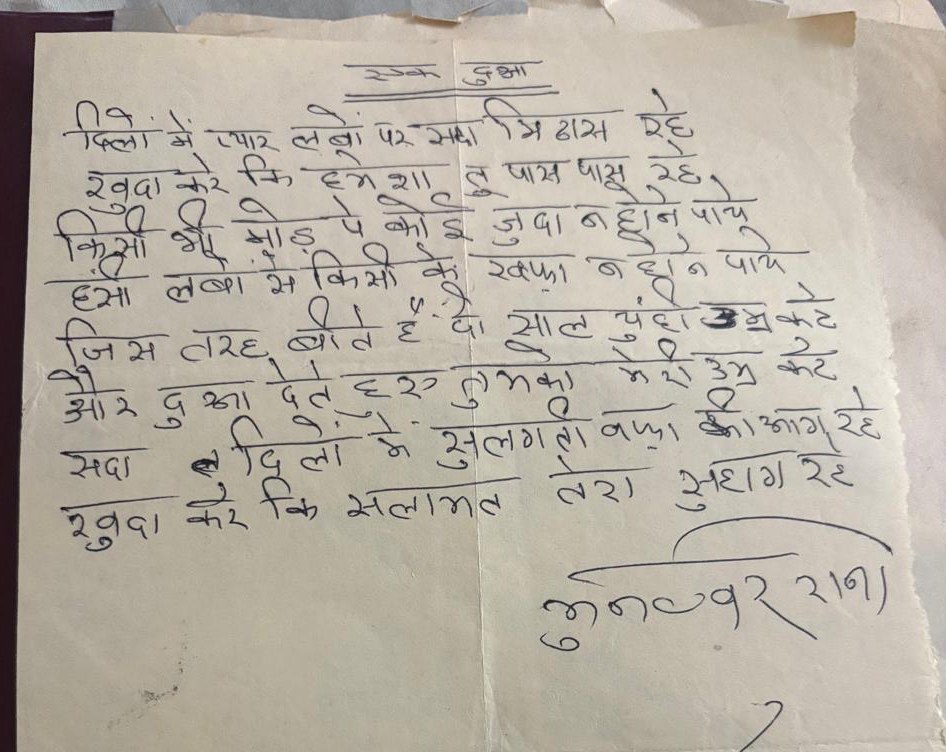
A Dua can also be deeply personal and timeless. For instance, I cherish a heartfelt prayer written down for my husband and me by the renowned late Urdu poet, Shri Munawwar Rana. He wrote this Dua when he visited our home and met me for the first time. This Dua, preserved on a small piece of paper, is a lifelong treasure.
Such a personal treasure shows how Dua connects our heart directly to the Almighty. In the same beautiful way, our tradition uses Ashirwad to pass love and blessings from person to person. An Ashirwad is a loving wish and blessing for good fortune, protection, healing, and success. Traditionally, it flows downward from elders to a younger person. It is usually given by people who hold a respectful place in our lives, such as Gurus, grandparents, parents, or mentors.
In our culture, elders hold a very sacred place, and younger people regularly seek their guidance. When you bow down and touch the feet of an elder, it shows great humility. This simple act of letting go of your pride fills the elder's heart with warmth, causing blessings to flow out naturally. We often hear family members say:
- "Dadi, isko ashirwad de ki isko acchi ladki mil jaye shadi ke liye!" (Dadi, bless him so he finds a good match for marriage!)
- "Bua Ji, isko ashirwad de ki iski naukri lag jaye acchi jagah!" (Bua Ji, bless him so he gets a good job!)
- "Mausi Ji, isko ashirwad de ki yeh jaldi theek ho jaye." (Mausi Ji, bless him so he recovers quickly.)
We inherit these small gestures from our centuries-old traditions. If the intentions of both sides are pure and everything is done "dil se" (from the heart), then blessings definitely work. This true faith in one another simplifies the journey of life, creating a bond we must all preserve.
However, blessings and good wishes do not always come strictly from blood relatives or older generations. Through our own goodwill, we often build deep bonds outside our biological families. We must always cherish and celebrate the sincere people who choose to stay by our side during our tough times; their blessings hold a special power.
Furthermore, blessings are not always bound by age. This is beautifully showcased during Kanya Pujan on the final day of Navratri. On this day, elders bow down to little girls, treating them as pure forms of divine energy. Here, the traditional hierarchy reverses, proving that even a little girl can bestow her blessings upon her elders. Even on ordinary days, the Kanya of a home holds this same sacred power to bring good fortune to the family.
You all must have experienced that whenever you visit religious places, the needy souls gathered there selflessly shower you with good wishes. Similarly, at busy traffic intersections, members of the transgender community readily extend their proactive goodwill, and many believe their blessings carry immense power. While these gestures often come from a place of survival, there is no harm in accepting them. We should never miss a chance to receive goodwill from anyone, regardless of their age and background. Doing this helps us to overcome our own social biases against others.
These kind everyday prayers, wishes, and blessings connect us directly to a deeper spiritual balance. We see this clearly when we look at how Dua and Ashirwad work together. We see a perfect balance between the two concepts:
- Dua is a vertical wave of energy: It is a humble whisper sent upward from a human heart to God, requesting Him to look after our wellbeing or the well-being of others.
- Ashirwad is a horizontal flow of energy: It is a natural grace passed directly from one person to another through a touch, a smile, or a look.
Their directions are different, but their goal is exactly the same: the well-being of a human soul. Both concepts bring massive positive changes to the giver and the receiver. Receiving them makes you feel safe, loved, protected, healed, and grounded. Wishing well for others removes anger, jealousy, and fear, replacing them with joy, happiness, and peace.
Yet, life does not always unfold according to our wishes and plans. There are moments when our prayers seem to go unanswered, and even the strongest blessings feel ineffective. In such difficult situations, we should act wisely by accepting the truth and trusting the divine timeline, believing that "jo bhi hua, usme Ishwar ki raza hai" (whatever happened, happened by God's will). Instead of breaking down, we must show patience and keep moving forward with the firm belief in the timeless words:
"Kal jab tum aankhen khologe, tab hoga ujiyara, Khushiyon ka sandesha lekar aayega samay harkara, Us din ke khwaab sajao, aur tum aage badh jaao."
Therefore, no matter where life takes you, remember this simple truth: Hamesha, Dua kiya karein, aur Ashirwad liya karein. You lose absolutely nothing by doing this, but you gain the greatest wealth of humanity. In a noisy world, let us choose to be the silence that Prays and the hand that Blesses.
With love, Rita 🤲
Comments
Be the first to leave a comment!